
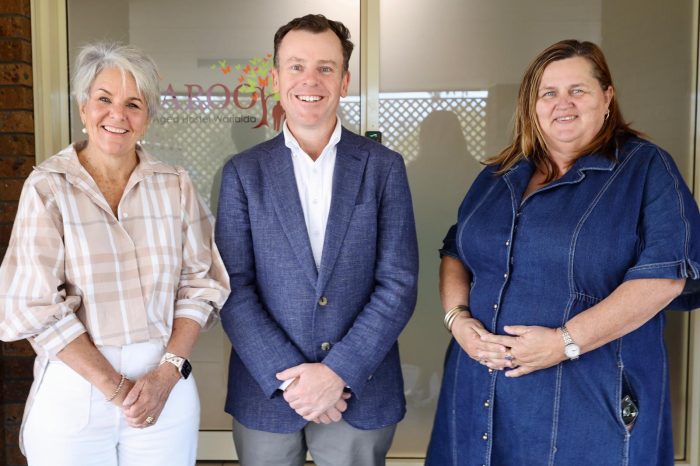
Member for Northern Tablelands Brendan Moylan has called on the NSW Government to provide greater transparency around proposed changes to the allocation of Financial Assistance Grants for local councils.
The State Government is currently reviewing the methodology used to distribute Financial Assistance Grants, with a new funding formula proposed to take effect from the 2027-28 financial year.
Under the proposed changes, some regional councils could receive significantly less funding, with reported reductions ranging from 10 to 50 per cent.
Mr Moylan said mayors and general managers across regional NSW had raised serious concerns about the lack of information provided to councils about how the changes have been calculated and the potential impact on already stretched local government budgets.
“The feedback I’ve received from local councils, not just in the Northern Tablelands but right across regional New South Wales, is that there has been very little transparency about how these Financial Assistance Grants have been calculated,” Mr Moylan said.
“Some councils appear set to benefit from the proposed changes, while others stand to lose millions of dollars, yet there has been little explanation as to how those outcomes have been determined.
“If councils cannot understand how their allocations have been calculated, it is incredibly unfair for them to be expected to accept substantial reductions in funding.”
Mr Moylan said councils have been advised that all operating grants may be included under the proposed methodology, including disaster recovery funding.
“Councils have raised legitimate concerns that disaster recovery funding should not be treated as ordinary revenue because it is provided to repair essential infrastructure following natural disasters, not to improve a council’s financial position,” he said.
Many councils have also expressed concern that the proposed methodology places too much emphasis on population based revenue measures, potentially disadvantaging rural and regional councils with small populations but extensive road networks and large geographic areas to maintain.
Mr Moylan said Gwydir Shire Council was one example of a council that will be negatively affected if the proposed changes proceed.
“Gwydir Shire delivers a wide range of important community services, including children’s services, youth programs, aged care, housing support and library services,” he said.
“Any reduction in funding places additional pressure on councils to cut services, increase fees and charges, or reduce staffing levels.
“Rural, regional and remote councils should not be punished for serving large areas with relatively small populations.”
Mr Moylan called on the Government to provide councils with full details of how the proposed allocations have been calculated and to guarantee that no council would be left worse off under the new arrangements.
“If the Government is confident, it has got these calculations right, it should guarantee that no rural, regional or remote council will receive less funding than it currently does,” Mr Moylan said.