
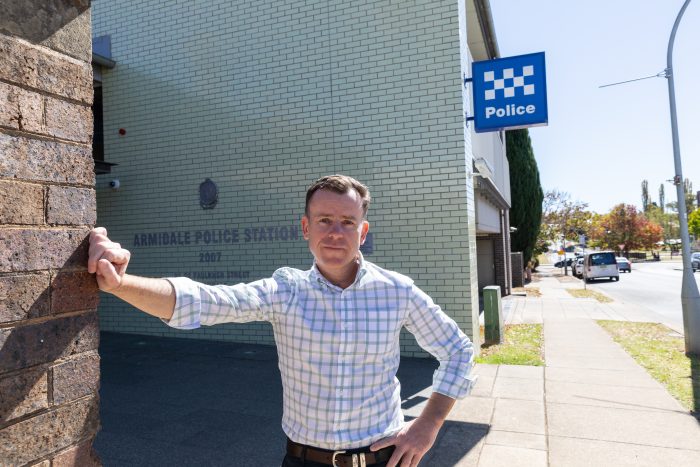
Member for Northern Tablelands and Shadow Minister for Prevention of Regional Crime Brendan Moylan has backed NSW Coalition plans to legislate a breach bail, go to jail policy.
Known as Luke’s Law, the legislation ensures anyone on bail who is then charged with another serious crime will not be eligible for bail and will remain behind bars.
The law honours the life of the life of Luke Manassa, who was allegedly murdered last year in a mistaken identity case.
Police have said one of the three teenagers charged over his death was on bail at the time.
“Too often police arrest offenders, are then released on bail and go on to commit more crimes,” Mr Moylan said.
“It’s not good enough for communities across the Northern Tablelands.
“Our approach is simple: breach bail, go to jail.”
Under Luke’s Law, the Bail act will be amended to ensure:
.Adults on bail charged with a serious indictable offence will have their bail automatically revoked and bail refused for the new charge.
.Any young person on bail charged with a serious children’s indictable offence (SCIO) will have their bail revoked and be refused bail for the new charge. This will include the Liberals and Nationals’ expanded list of SCIOs under our Adult Crime, Adult Time laws.
Breach Bail, Go to Jail laws form part of the NSW Liberals and Nationals’ plan for Safer Streets, Stronger Communities, which includes:
.Adult Crime, Adult Time laws
.Anytime, Anywhere knife wanding laws.
.Creating new offences of using a violence broker or acting as a violence broker with a maximum penalty of 16 years or 20 years if a child is involved.
.Doubling the funding to the NSW Crime Commission to allow it to identify more participants in organised crime and confiscate their unexplained wealth.
.Extending unexplained wealth orders so they apply to anyone reasonably suspected of acting as or using a violence broker.
.Proposed laws to protect children from extremist grooming and radicalisation.
“These laws put victims first,” Mr Moylan said.
“I’m confident, serious offenders will be kept off the streets, making our communities safe.”